
Russia Is Supplying Iran With Intelligence to Strike American Forces
Reports from U.S. officials suggest Russia may be providing intelligence to Iran to help target American military assets in the Middle East. The alleged cooperation comes as the ongoing conflict escalates, resulting in casualties, drone and missile strikes, and a large-scale U.S.–Israeli military campaign against Iranian infrastructure.
 admin
admin
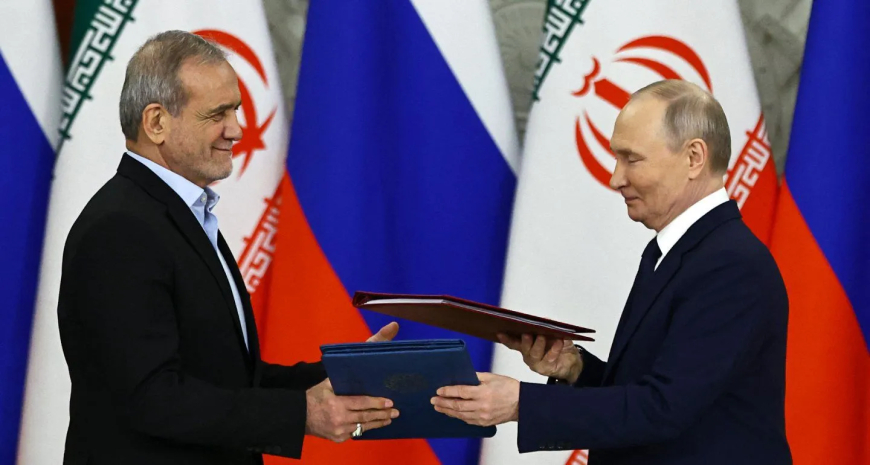
Russia Accused of Providing Intelligence Support to Iran Amid Escalating Middle East Conflict
Reports emerging from Washington suggest that Russia may be assisting Iran by providing intelligence that could help Tehran target United States military positions across the Middle East. The allegations, cited by several officials familiar with sensitive intelligence assessments, indicate that the ongoing conflict in the region may be expanding beyond a localized confrontation and drawing in global powers with significant military and intelligence capabilities.
According to three officials who spoke on condition of anonymity due to the classified nature of the information, Moscow has allegedly shared details regarding the locations of U.S. military assets with Iranian authorities. These assets reportedly include naval vessels, military aircraft, and other strategic equipment deployed throughout the region. The officials claim that such intelligence support may have enabled Iran to carry out more precise and sophisticated attacks using drones and missile systems.
The reports were first highlighted by The Washington Post and later circulated through international media outlets. If confirmed, the alleged cooperation would mark a significant development in the geopolitical landscape, as Russia is one of Washington’s most prominent strategic rivals and possesses extensive intelligence-gathering capabilities.
Alleged Intelligence Sharing Raises Strategic Concerns
Officials in Washington believe the intelligence assistance may have begun shortly after the outbreak of hostilities earlier this week. Since the start of the conflict, Iranian forces have reportedly launched thousands of one-way attack drones along with hundreds of ballistic missiles aimed at various targets associated with U.S. operations. These targets reportedly include military bases, diplomatic facilities, and other infrastructure linked to American presence in the region.
Defense analysts say that while Iran has historically maintained its own surveillance and reconnaissance capabilities, access to advanced intelligence from a major power could significantly enhance its targeting accuracy. Intelligence sharing could provide real-time information about troop movements, aircraft deployment, naval operations, and radar coverage.
One of the officials familiar with the intelligence assessment noted that the precise extent of Moscow’s assistance remains unclear. However, the official added that Iran’s ability to locate and strike certain U.S. installations appears to have improved during the early days of the conflict, raising concerns that external intelligence support may be involved.
Despite these claims, the Russian Embassy in Washington has not responded to requests for comment regarding the allegations. The Kremlin has previously called for a cessation of hostilities, describing the war as an “unprovoked act of armed aggression,” though it has avoided addressing specific accusations related to intelligence cooperation with Tehran.
Rising Casualties as Conflict Intensifies
The ongoing confrontation has already resulted in casualties and significant damage to military infrastructure across the region. U.S. defense officials confirmed that six American service members were killed in a drone attack reportedly launched by Iranian forces. The strike occurred on Sunday at a military installation in Kuwait, leaving several other personnel injured.
The attack marked one of the deadliest incidents involving American troops since the conflict began. Military experts believe that the use of coordinated drone swarms combined with missile strikes demonstrates an increasingly sophisticated battlefield strategy by Iranian forces.
Iran has reportedly launched numerous waves of aerial attacks, including large numbers of unmanned aerial vehicles designed to overwhelm air defense systems. Such one-way attack drones, sometimes referred to as “loitering munitions,” are capable of flying long distances before striking their targets with precision.
In response to these actions, the United States and Israel have intensified their joint military operations targeting Iranian infrastructure. According to officials involved in the campaign, more than 2,000 targets have been struck since the beginning of the conflict. These targets reportedly include ballistic missile launch sites, naval installations, weapons production facilities, and locations associated with Iran’s military leadership.
U.S. Officials Highlight Impact on Iranian Military Capabilities
Despite the growing intensity of the conflict, U.S. officials maintain that Iranian military capabilities are being significantly weakened by the ongoing strikes. White House spokeswoman Anna Kelly stated that the joint campaign is having a substantial impact on Tehran’s military infrastructure.
“The Iranian regime is being absolutely crushed,” Kelly said during a briefing. “Their ballistic missile retaliation is decreasing every day, their naval capabilities are being neutralized, and their weapons production capacity is being severely degraded.”
Kelly did not directly address the allegations regarding Russian intelligence support but emphasized that U.S. and allied forces continue to maintain operational superiority in the region.
Military analysts note that modern conflicts increasingly involve complex networks of intelligence, surveillance, and reconnaissance systems. Satellite imagery, electronic intercepts, and cyber intelligence all play a critical role in identifying targets and coordinating military operations. If Russia is indeed sharing such information with Iran, it could represent a new dimension in the confrontation.
CIA and Pentagon Decline to Comment
Both the Central Intelligence Agency and the U.S. Department of Defense have declined to comment publicly on the reports. Officials say intelligence matters of this sensitivity are rarely discussed openly due to national security considerations.
However, two individuals familiar with the internal intelligence assessments indicated that U.S. analysts are carefully examining the possibility of external involvement in Iran’s recent targeting successes. They noted that the speed and accuracy of certain attacks have raised questions within intelligence circles.
China’s Role Appears Limited
While Russia’s alleged involvement has drawn attention, officials say there is currently no evidence that China is providing direct military assistance to Iran in the ongoing conflict. Although Beijing maintains strong diplomatic and economic ties with Tehran, intelligence assessments suggest that China has so far avoided becoming directly involved in the military aspect of the confrontation.
Analysts believe China may be reluctant to risk broader international escalation, particularly given its global economic interests and complex diplomatic relationships with countries across the Middle East.
Strategic Implications for Global Security
The possibility that Russia could be sharing intelligence with Iran has raised concerns among policymakers about the potential expansion of the conflict beyond the Middle East. A situation in which multiple global powers indirectly support opposing sides could significantly increase the risk of prolonged instability.
Experts warn that intelligence cooperation between states engaged in separate geopolitical rivalries can create complex alliances and unpredictable outcomes. If confirmed, the reported intelligence-sharing arrangement could represent a deeper level of coordination between Moscow and Tehran than previously understood.
For now, officials say investigations into the claims are ongoing. The situation remains fluid, and developments in the coming days may determine whether the conflict remains regionally contained or evolves into a broader international crisis.
As tensions continue to rise, diplomatic observers are urging renewed efforts to pursue de-escalation and dialogue. Whether such initiatives can succeed in the midst of escalating military operations remains uncertain, but many experts agree that preventing further expansion of the conflict is a priority for global stability.