
The Post-Inflection Point Economy: Why 2.6% Growth Feels Different in 2026
An analysis of the global economic outlook for 2026, examining why projected global growth of 2.6% reflects deeper structural shifts, widening inequality between advanced and developing economies, energy market risks, and the policy challenges shaping the post-pandemic global economy.
Byline: By ThePressFly.com Economic Bureau
Date: March 15, 2026
Reading Time: 8 Minutes
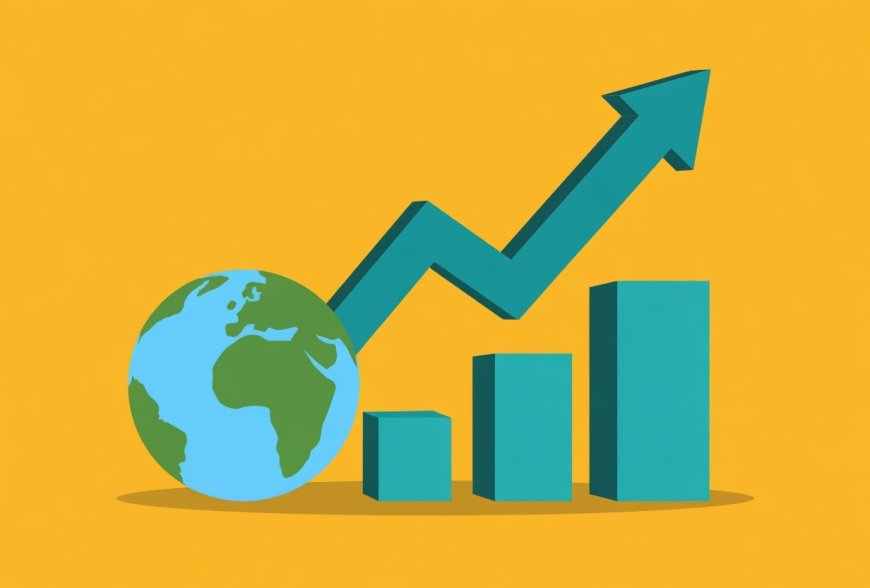
As the first quarter of 2026 draws to a close, the global economy presents a paradox of statistical stability and structural turbulence. According to the latest Global Economic Prospects report from the World Bank, global growth is projected to hold steady at 2.6 percent in 2026 . Similarly, Fitch Ratings has revised its forecast upward to 2.6 percent, acknowledging the world economy"s resilience against a succession of geopolitical and policy shocks .
On the surface, these numbers suggest a soft landing. Global inflation is expected to edge down to 2.6 percent, supported by softer labor markets and easing energy prices . However, beneath this veneer of stability lies a reality that INSEAD Professor Antonio Fatas describes as an "inflection point" in politics and economics—one from which there is no return to the pre-2020 status quo .
The Resilience Mirage
The primary driver of this resilience has been the decoupling of macroeconomic data from microeconomic anxiety. In 2025, surging AI-related investment and large fiscal deficits in the US and China offset the impact of higher tariffs. US equity markets remained buoyant, boosting consumption through wealth effects . However, this dynamic is showing signs of fatigue.
Fitch now projects US growth to slow to 2.2 percent in 2026, as labor market weakness begins to weigh on household income . The jobs market is cooling, and manufacturing employment is shrinking—a sign that the reshoring narrative has yet to translate into widespread industrial job gains .
The Divergence Between Nations
One of the most alarming trends highlighted by the World Bank is the growing gap between advanced economies and the developing world. While nearly all advanced economies have per capita incomes exceeding pre-pandemic levels, one in four developing economies remains poorer than they were in 2019 .
This disparity is setting the stage for a lost decade. The 2020s are currently on track to be the weakest decade for global growth since the 1960s. For developing economies, per capita income growth is projected at just 3 percent in 2026—a full percentage point below their historical average. At this pace, a person in a developing economy will earn only 12 percent of what their counterpart in an advanced economy earns .
The Oil Wildcard
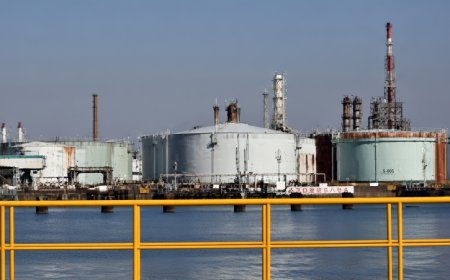
Forecasts for 2026 hinge heavily on the trajectory of energy prices. Fitch"s baseline assumes that the recent closure of the Strait of Hormuz is short-lived, keeping Brent crude around USD 70 per barrel. However, in an adverse scenario where prices spike to USD 100 and remain there, the shock would reduce world GDP by 0.4 percentage points and add 1.2 to 1.5 percentage points to inflation in the US and Europe . This would effectively erase the modest growth cushion policymakers currently enjoy.
Regional Snapshot: Three Worlds
The global economy is fragmenting into distinct growth clusters. The World Economic Forum"s Chief Economists Outlook reveals that South Asia is the standout performer, with 66 percent of economists expecting strong growth, driven by India"s momentum .
In contrast, Europe confronts the bleakest outlook. A staggering 53 percent of chief economists expect weak growth in the region, burdened by energy dependency and structural rigidity. Only 3 percent anticipate a strong performance .
Meanwhile, China is navigating a delicate transition. With growth forecast to slow to 4.3 percent in 2026 (down from 5 percent in 2025), the economy is grappling with weakening consumer spending and cooling export growth . The property sector"s lingering woes continue to sap household confidence.
Policy Crossroads
With public debt in emerging markets at its highest level in half a century, the margin for error is razor-thin. The World Bank emphasizes that restoring fiscal credibility is an "urgent priority." Well-designed fiscal rules—limits on deficits or spending—are linked to stronger growth and greater resilience to shocks. However, rules alone are insufficient without institutional credibility .
As we move through 2026, the central challenge for business leaders will be navigating a world where growth is tepid, inequality is widening, and the old rules of globalization are being rewritten. The data shows resilience, but the street-level reality is one of adaptation to a permanently more complex environment.





Comments (0)