
Iran War shakes global markets, here’s what you should know
Rising geopolitical tensions involving the United States and Iran have triggered volatility in global financial markets, prompting investors to reconsider their strategies. Experts advise investors to avoid panic-driven decisions, maintain diversified portfolios, and focus on long-term investment goals rather than reacting emotionally to short-term market fluctuations
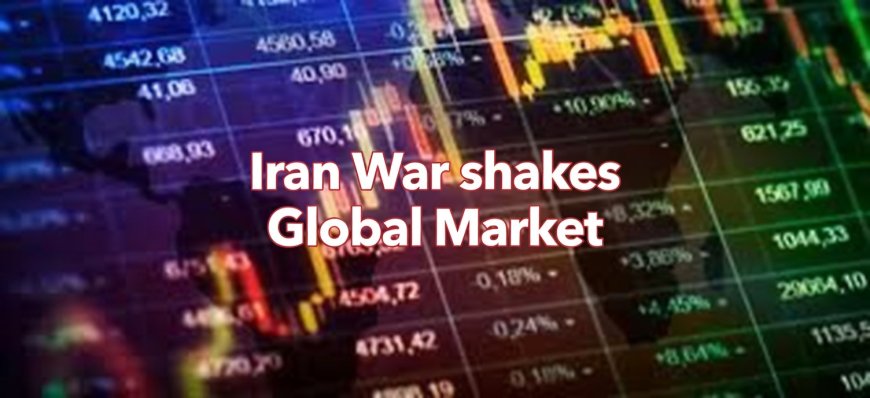
Periods of geopolitical tension often bring heightened volatility to global financial markets, prompting uncertainty among investors. The recent escalation in tensions involving Iran and military actions ordered by Donald Trump, the President of the United States, have once again reminded market participants how quickly geopolitical developments can influence investor sentiment.
Financial markets around the world reacted sharply following reports of the strike, with fluctuations in stock indices, currency markets, and commodity prices. Such reactions are not unusual during periods of geopolitical instability, as investors reassess risk levels and attempt to gauge potential economic consequences.
Despite these sudden market movements, financial experts consistently emphasize that the best course of action for most investors is to remain calm and avoid making emotional, fear-driven decisions. History has repeatedly shown that impulsive reactions during market turbulence often lead to poor investment outcomes.
Why Geopolitical Events Trigger Market Volatility
Global financial markets are highly sensitive to geopolitical developments because such events can influence economic stability, energy supplies, international trade, and investor confidence.
In the case of rising tensions with Iran, concerns often center around disruptions to oil supplies and broader regional instability in the Middle East. Because the region plays a central role in global energy production, any potential conflict can push oil prices higher and increase inflation risks across many economies.
Investors typically react quickly to such uncertainties, leading to sudden movements in asset prices. Stock markets may decline as investors seek safer assets, while commodities such as gold and oil often experience sharp increases.
However, these initial market reactions are often driven more by sentiment than by long-term economic fundamentals.
The Danger of Emotional Investing
Financial advisers frequently warn that emotional decision-making can be one of the most damaging behaviors for investors.
During periods of uncertainty, fear can push investors to sell assets prematurely, often at a loss. Conversely, sudden optimism can encourage risky investments without adequate analysis.
These reactions are especially common during major news events or geopolitical crises, when headlines and social media discussions can amplify anxiety.
For long-term investors, maintaining a disciplined strategy is typically far more effective than reacting to short-term market swings.
Lessons From Past Market Crises
History provides numerous examples demonstrating that markets tend to recover from geopolitical shocks over time.
Major events such as wars, political conflicts, and international crises have repeatedly caused short-term volatility in financial markets. However, long-term investment trends are usually driven by economic growth, technological innovation, corporate performance, and demographic changes.
Investors who remained committed to diversified portfolios during previous periods of uncertainty often benefited from subsequent market recoveries.
As a result, financial planners often encourage investors to view market turbulence as a normal component of investing rather than as a signal to abandon long-term strategies.
What Investors Should Do During Market Turbulence
When markets become unstable due to geopolitical events, experts recommend several key principles to guide investment decisions:
1. Maintain a Long-Term Perspective
Successful investing generally requires patience and discipline. Long-term investors typically benefit from staying focused on financial goals rather than reacting to daily market fluctuations.
Market downturns triggered by geopolitical developments are often temporary and may not significantly alter long-term economic trends.
2. Avoid Panic Selling
Selling investments during periods of market stress can lock in losses that might otherwise recover when conditions stabilize. Investors who sell during downturns may also miss the subsequent rebound that frequently follows market corrections.
3. Maintain Portfolio Diversification
Diversification remains one of the most effective strategies for managing investment risk. Holding a mix of asset classes—including stocks, bonds, and commodities—can help reduce the impact of volatility in any single market sector.
4. Reassess Risk Tolerance
While investors should avoid panic-driven decisions, periods of market volatility can provide an opportunity to review whether their portfolios align with their risk tolerance and long-term objectives.
For example, individuals nearing retirement may prefer to shift toward more stable investments, while younger investors may be better positioned to tolerate short-term volatility.
What Investors Should Avoid
Equally important is understanding what not to do during periods of geopolitical uncertainty.
Making Impulsive Trades
Frequent trading based on short-term news developments can lead to increased transaction costs and poor timing decisions.
Attempting to Time the Market
Trying to predict exactly when markets will rise or fall is extremely difficult, even for experienced professionals. Investors who attempt to time the market often miss the strongest periods of recovery.
Overreacting to Headlines
News coverage during geopolitical crises can be intense and sometimes sensational. While staying informed is important, investment decisions should be based on careful analysis rather than emotional reactions to breaking news.
Market Sentiment and Political Messaging
Interestingly, political messaging during times of conflict can also influence investor psychology.
Shortly after authorizing the strike against Iran, President Donald Trump addressed a ceremony at the White House where he discussed plans related to the building’s decor, including a proposed ballroom he described as “spectacular” and “most beautiful.”
During remarks at a Medal of Honor ceremony, Trump pointed toward the location where the ballroom could be built and commented on its design, suggesting it would be an impressive addition to the historic residence.
While the remarks were unrelated to the geopolitical situation, they illustrated the contrast between political communication and the intense market reactions unfolding at the same time.
For investors, such moments highlight the importance of focusing on economic fundamentals rather than the emotional tone of political developments.
The Role of Financial Planning
Periods of market volatility often reinforce the value of having a well-structured financial plan.
Investors who have clear long-term goals, diversified portfolios, and disciplined strategies are generally better equipped to withstand temporary market disruptions.
Financial advisers frequently recommend building portfolios designed to endure a variety of economic conditions, including geopolitical crises, economic recessions, and periods of inflation.
Such preparation can reduce the temptation to make impulsive decisions during times of uncertainty.
Looking Beyond Short-Term Turbulence
Although geopolitical tensions involving Iran and the United States have created short-term market turbulence, the broader outlook for global financial markets will ultimately depend on economic fundamentals rather than temporary shocks.
Corporate earnings, technological innovation, government policies, and global economic growth will continue to shape investment opportunities in the years ahead.
For most investors, maintaining a disciplined and patient approach remains the most reliable strategy for navigating uncertain markets.
In times of geopolitical tension, the most valuable investment decision may simply be staying calm and staying invested.




Comments (0)