U.S. Announces $10 Million Reward for Information on Iran’s New Supreme Leader and Senior Officials
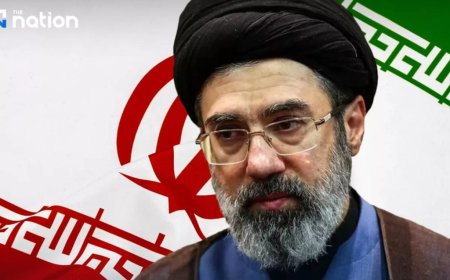
The United States has announced a $10 million reward for information on Iran’s new supreme leader Mojtaba Khamenei and several senior officials, accusing them of directing elements of the Islamic Revolutionary Guard Corps involved in global terrorism activities.
 admin
admin
U.S. Announces $10 Million Reward for Information on Iran’s New Supreme Leader and Senior Officials
The government of the United States has announced a reward of up to $10 million for information related to senior Iranian figures, including the country’s newly named supreme leader, Mojtaba Khamenei. The offer was disclosed on Friday by the United States Department of State as part of its ongoing efforts to gather intelligence about individuals it accuses of directing global terrorist activities.
According to the State Department, the reward is being offered through its long-running Rewards for Justice initiative, a program designed to encourage individuals around the world to provide actionable information that could lead to the identification, capture, or prosecution of persons involved in terrorism.
Targeting Senior Iranian Officials
The U.S. government said Mojtaba Khamenei is among a group of ten senior Iranian officials it has placed on its latest reward list. American authorities claim these individuals are closely linked to the operations of the Islamic Revolutionary Guard Corps (IRGC), a powerful military and political force within Iran that Washington has designated as a terrorist organization.
Among those also named are Eskandar Momeni, Iran’s interior minister, and Esmail Khatib, the country’s minister of intelligence and security. U.S. officials allege that these figures play key roles in overseeing networks responsible for planning and coordinating operations that extend beyond Iran’s borders.
In a statement explaining the reward announcement, the State Department said the individuals identified in the list are believed to “command and direct various elements” of the IRGC. The agency claims that these units are involved in organizing and carrying out activities that it describes as terrorism in multiple regions around the world.
Intelligence Gathering Effort
U.S. authorities said the reward is intended to encourage people with relevant information to come forward. The State Department specifically urged potential informants to submit tips using secure and anonymous communication platforms, including the privacy-focused browser Tor and the encrypted messaging service Signal.
Officials noted that individuals who provide credible information may qualify not only for financial compensation but also for relocation support in certain cases. According to the agency, this provision is intended to protect the safety of those who may be at risk after sharing sensitive intelligence.
“Your information could make you eligible for relocation and a reward,” the State Department said in its announcement, highlighting the incentives available to those willing to assist.
The Rewards for Justice program has historically played a role in several high-profile counterterrorism cases. Since its establishment in the 1980s, the initiative has distributed millions of dollars to sources whose information helped disrupt planned attacks or locate individuals accused of terrorism-related crimes.
Leadership Changes in Iran
The reward announcement comes amid significant political developments in Iran. Mojtaba Khamenei, the son of the late Iranian leader Ali Khamenei, recently emerged as the country’s new supreme leader following his father’s death.
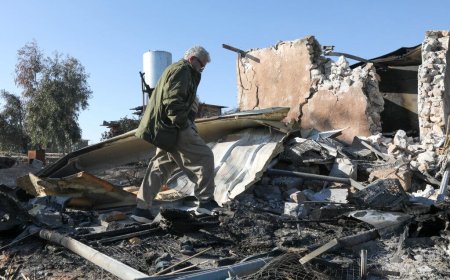
Ali Khamenei was killed in a bombing on February 28, an incident that reportedly occurred during the early stages of a conflict involving the United States and Israel against Iran. The attack marked a dramatic escalation in tensions in the region and triggered widespread speculation about the future direction of Iran’s leadership and foreign policy.
The rise of Mojtaba Khamenei to the country’s highest political and religious authority has drawn intense international scrutiny. Analysts say the leadership transition could reshape power dynamics within Iran’s political establishment, particularly in relation to the influence of the Islamic Revolutionary Guard Corps.
Growing Tensions in the Middle East
The reward announcement also highlights the deepening geopolitical rivalry between the United States and Iran. Relations between the two countries have remained strained for decades, largely due to disagreements over Iran’s regional policies, its nuclear program, and its support for armed groups across the Middle East.
Washington has repeatedly accused the IRGC of sponsoring or coordinating attacks through allied militias and proxy organizations in several countries. Tehran, however, has consistently rejected these allegations, maintaining that its actions are aimed at defending national interests and supporting regional allies.
The involvement of Israel in the ongoing confrontation has further complicated the situation. Israel has long viewed Iran as its most significant security threat and has frequently warned about Tehran’s expanding military and political influence across the Middle East.
International Reactions and Security Implications
Security analysts say the U.S. reward announcement is likely to intensify diplomatic tensions between Washington and Tehran. Publicly offering financial incentives for intelligence on top Iranian officials could be perceived by Iranian authorities as an escalation of political pressure.
At the same time, supporters of the measure argue that programs like Rewards for Justice remain an important tool in international counterterrorism efforts. By encouraging insiders or witnesses to provide information, governments can potentially disrupt networks involved in planning attacks.
Experts also note that reward programs can play a role in gathering intelligence in environments where traditional investigative methods may be difficult.
The Role of the Rewards for Justice Program
The Rewards for Justice initiative has been used by the United States government to pursue individuals accused of terrorism or involvement in violent extremist organizations. Over the years, the program has offered rewards for information on figures associated with groups such as Al-Qaeda and other internationally sanctioned networks.
Officials say the program’s effectiveness depends largely on cooperation from individuals who may have access to information not readily available through official channels.
With the addition of Mojtaba Khamenei and other Iranian officials to its list, the State Department has signaled that it intends to maintain pressure on figures it believes are linked to the activities of the Islamic Revolutionary Guard Corps.
Uncertain Outlook
As geopolitical tensions continue to rise, the reward announcement underscores the broader struggle for influence and security across the Middle East. The evolving leadership structure in Iran, combined with ongoing regional conflicts, suggests that relations between Washington and Tehran are unlikely to improve in the near future.
For now, the U.S. government says it will continue to rely on intelligence cooperation and international partnerships to pursue individuals it considers responsible for directing or supporting acts of terrorism.
Whether the reward offer will produce actionable information remains uncertain. However, the move highlights the growing complexity of the security challenges facing both the United States and its allies as they navigate an increasingly volatile global landscape.