Tehran Threatens Google, Microsoft, and Other U.S. Firms as War Expands
Iran has issued warnings to major U.S. technology companies, including Google, Microsoft, and IBM, signaling that their offices and infrastructure could be targeted amid escalating regional conflict. The move comes as the war between Iran, the United States, and Israel intensifies, with attacks on economic centers, banks, and critical infrastructure raising concerns over regional stability.
 admin
admin
Iran Warns U.S. Technology Firms as Regional Conflict Intensifies
Tensions in the Middle East escalated further on Wednesday after Iranian authorities issued a stark warning to several major American technology companies. According to Iranian officials and reports from regional media outlets, offices and digital infrastructure belonging to prominent U.S.-based tech firms could potentially become targets if the ongoing conflict in the region continues to expand.
The warning signals a possible shift in the nature of modern warfare in the Middle East, where digital infrastructure and technological networks are increasingly viewed as strategic assets. Analysts say the development reflects the growing role of technology companies in global security, particularly in conflicts where cyber capabilities, cloud computing, and advanced data systems are heavily relied upon.
Allegations Against U.S. Technology Infrastructure
Iran’s warning followed the publication of a report by the Tasnim News Agency, a media outlet widely known for its association with the country’s Islamic Revolutionary Guard Corps (IRGC). In the report, the agency released what it described as a list of facilities operated by major U.S. technology corporations that it claims have links to Israel or are being used for military-related activities.
According to the report, the facilities include data centers and technology hubs that support cloud computing services and advanced digital systems. The companies mentioned include some of the world’s most influential technology firms, such as Google, Microsoft, Palantir Technologies, IBM, Nvidia, and Oracle Corporation.
Tasnim claimed that the infrastructure associated with these firms had been identified as potential targets due to allegations that their technologies were being utilized in military applications connected to Israel. The agency described these locations as part of what it called “Iran’s new targets,” suggesting that the scope of the conflict could extend beyond conventional military installations.
While the report did not provide independent verification of these claims, it indicated that the facilities are located across several cities in Israel as well as in a number of Gulf countries. The publication of the list has raised concerns among security analysts, who warn that the targeting of technology infrastructure could have significant implications for both regional stability and the global digital economy.
Expanding Scope of the Conflict
The Tasnim report suggested that the regional conflict may be entering what it described as a new phase. According to the agency, the battlefield is no longer limited to traditional military sites but could now include critical infrastructure such as data centers, communication networks, and technology facilities.
“As the scope of the regional war expands to infrastructure war, the scope of Iran’s legitimate targets expands,” the report stated.
This framing reflects a broader trend in modern warfare, where strategic assets often include digital networks, financial systems, and technological infrastructure. Experts note that many military operations today depend heavily on data analysis, artificial intelligence, and cloud-based platforms, making technology companies an increasingly important part of national defense ecosystems.
However, critics argue that expanding the definition of legitimate targets to include civilian-run technology infrastructure could endanger workers, disrupt essential services, and escalate an already volatile conflict.
Threats to Economic Institutions
In addition to technology facilities, Iranian officials also suggested that economic institutions connected to the United States or Israel could face potential retaliation.
A spokesperson for Khatam al-Anbiya Headquarters—an organization described by the United Nations as being linked to the IRGC—said the warning was issued following what Iranian authorities described as an attack on one of their banking institutions.
According to the spokesperson, the incident has prompted Iranian officials to consider a broader range of retaliatory options. The official stated that economic centers and banks connected to the United States and Israel within the region could become potential targets if hostilities continue.
“The enemy has left our hands open to target economic centers and banks belonging to the United States and the Zionist regime in the region,” the spokesperson reportedly said.
The official also issued a warning to civilians, urging them to avoid locations that might be considered strategic or symbolic economic targets. In particular, residents in the region were advised not to remain within a one-kilometre radius of banking facilities, suggesting concerns about potential attacks on financial infrastructure.
Ongoing Military Escalation
The warnings come as the broader conflict involving Iran, the United States, and Israel entered its twelfth day on Wednesday. Fighting has spread across several areas in the region, raising fears of a wider confrontation.
In Lebanon, the country’s health ministry reported that Israeli airstrikes early Wednesday resulted in at least seven fatalities across southern parts of the country. Among the victims were five people in the town of Qana, a location that has historically been affected by previous rounds of conflict in the region.
The strikes are part of ongoing military exchanges along the Israel–Lebanon border, where tensions have remained high amid the broader regional crisis.
Reports of Heavy Bombardment in Tehran
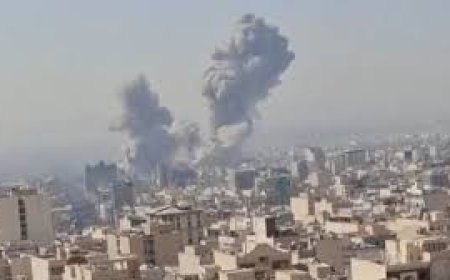
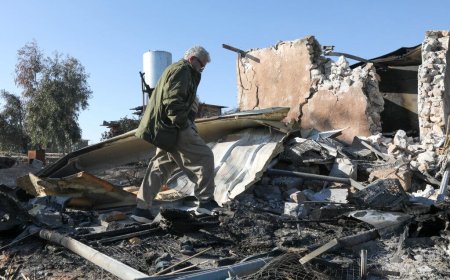
Meanwhile, residents of Iran’s capital, Tehran, reported experiencing some of the most intense bombardment since the beginning of the conflict. Overnight explosions were heard across multiple neighborhoods, with powerful blasts shaking residential areas and damaging infrastructure.
Witnesses described the sounds of repeated detonations echoing across the city, creating widespread anxiety among residents. In several districts, electricity outages were reported following the strikes, leaving parts of the capital temporarily without power.
Although Iranian authorities have not released full details about the targets of the strikes, local reports suggest that some industrial and infrastructure sites may have been affected.
Growing Concerns Over Regional Stability
The developments have raised concerns among international observers about the potential for the conflict to spiral further out of control. If attacks were to extend to technology companies or economic institutions, analysts warn that the consequences could reach far beyond the Middle East.
Many of the companies mentioned in the Tasnim report operate global digital infrastructure that supports cloud computing, financial systems, artificial intelligence research, and communications services used by millions of businesses and individuals worldwide.
Any disruption to such networks could have cascading effects across international markets and supply chains.
Diplomatic efforts by global powers are ongoing, with several countries calling for restraint and urging all parties involved to avoid actions that could broaden the conflict.
The Role of Technology in Modern Warfare
The situation also highlights the increasingly complex relationship between technology companies and global security. Over the past decade, many private technology firms have developed tools that are used by governments for both civilian and defense purposes.
Cloud computing platforms, satellite data analysis, artificial intelligence systems, and cybersecurity tools are now deeply integrated into military operations around the world.
As a result, the line between civilian technology infrastructure and military capability has become more blurred, raising new ethical and security questions.
For technology companies operating in multiple countries, these tensions present difficult challenges. Firms must navigate geopolitical pressures while maintaining their global operations and protecting employees working in regions affected by conflict.
Uncertain Path Forward
As the conflict continues to unfold, the warning issued by Iranian authorities underscores the possibility that the confrontation could move into new domains—including cyberspace, economic networks, and critical digital infrastructure.
Observers say the coming days will be crucial in determining whether diplomatic efforts can prevent further escalation or whether the conflict will continue to expand into additional sectors and regions.
For now, the region remains on edge as governments, corporations, and civilians alike monitor the rapidly evolving situation.