Beyond the Grid: The Political and Technical Revolution Shaping F1's Future
The 2026 season is the start of a new regulatory era, one defined by three seismic shifts: a new, sustainability-focused engine formula;
 admin
admin
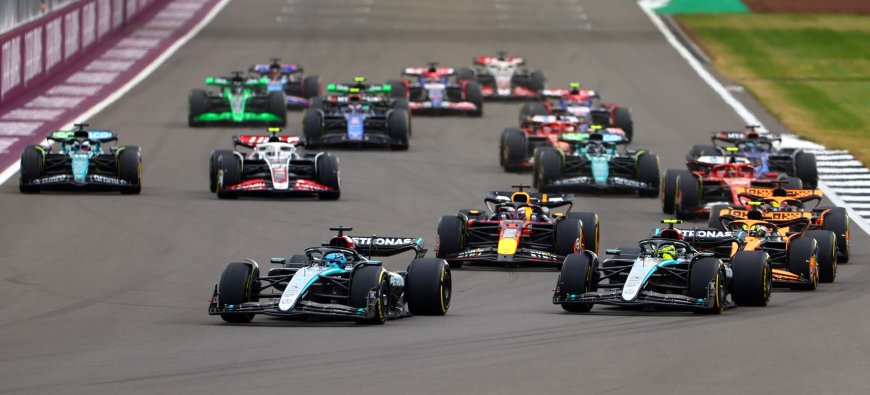
Formula 1 has always been a sport defined by constant, restless motion. The cars get faster, the drivers get younger, and the technological innovations become increasingly esoteric. Yet, as the paddock prepares for the 2026 season, the sport is not just moving; it is undergoing a profound mutation.
The 2026 season is the start of a new regulatory era, one defined by three seismic shifts: a new, sustainability-focused engine formula; a major aerodynamic overhaul; and a massive reshuffling of the constructor landscape, headlined by the entry of Audi.
This is not a story about 2026; it is about the entire architecture of Motorsport over the next decade.
The heart of the 2026 revolution lies in the Power Unit (PU). The current 1.6-liter V6 turbo-hybrids, in use since 2014, will be replaced by a PU that is significantly more electric. While the internal combustion engine (ICE) remains, its power output is roughly halved, with the MGU-K (the kinetic energy harvesting system) nearly tripling its output to compensate. The goal: a PU that is 50% electric, running on 100% sustainable fuels.
This technological pivot is a commercial imperative for F1. Automotive manufacturers need these regulations to justify their involvement to boards and consumers, showcasing technology that will eventually find its way into road cars.
The technical complexity is staggering. Manufacturers like Mercedes, Ferrari, and Renault (now Alpine) must manage the immense heat of these high-output batteries while ensuring the ICE remains efficient on sustainable fuel. Honda (partnering with Aston Martin) is returning as a full PU manufacturer, banking on their hybrid expertise.
But the biggest story is the new entity: Audi. The German giant, under the leadership of Andreas Seidl (formerly of McLaren), is not just entering; they are integrating as a full works team by acquiring the Sauber entry. The political and engineering resources behind Audi are immense.
"Audi is not coming here to make up the numbers," says a senior F1 engineer. "They have spent three years developing their 2026 PU. The integration between Neuburg (PU) and Hinwil (Chassis) is absolute. They are building a juggernaut."
The entry of Audi, combined with the new regulations, has scrambled the driver market in unprecedented ways. It is widely understood that several top drivers, including George Russell and perhaps even Lando Norris, have clauses in their contracts linked to the performance of their respective PU manufacturers in the 2026 specifications. Audi, with a reported €200m+ annual development budget, is a potent allure.
This technical shift also impacts the championship. The current dominance of Max Verstappen and Red Bull Racing is partially based on their partnership with Honda, whose current PU is the benchmark. With Honda moving to Aston Martin in 2026, Red Bull is building its own Power Unit division (Red Bull Powertrains) in-house, with technical assistance from Ford. This is an immense engineering risk. If they get it wrong, Verstappen’s era of dominance could end as abruptly as it began.
"We know 2026 is a massive, massive challenge," Christian Horner, Red Bull Team Principal, has acknowledged. "For the first time in our history, we are controlling our own destiny. If we fail, it is on us. But the reward is total integration."
The political battles will be as intense as the technical ones. The 2026 budget cap is being adjusted to reflect inflation and the increased costs of PU development. Teams are already squabbling over how much "sustainable fuel" counts towards the total cost cap, and how "non-F1" engineering activities must be accounted for.
As we move closer to that 2026 grid, the only constant is uncertainty. Formula 1 is a sport where the largest budget does not always win, but the most innovative one does. The 2026 regulations have not just changed the rules; they have entirely redrawn the game. The champions of the future will be the ones who manage to decipher the complex, electric DNA of the next generation.