Iran’s New Supreme Leader Mojtaba Khamenei Issues First Public Message Amid Escalating Regional War
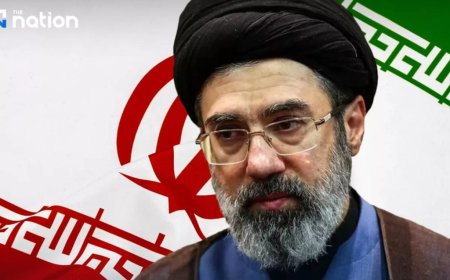
Mojtaba Khamenei delivers his first statement as Iran’s new supreme leader following the assassination of Ali Khamenei. He calls for national unity, warns U.S. bases in the region, and signals continued pressure through the Strait of Hormuz amid the escalating Middle East conflict.
 admin
admin
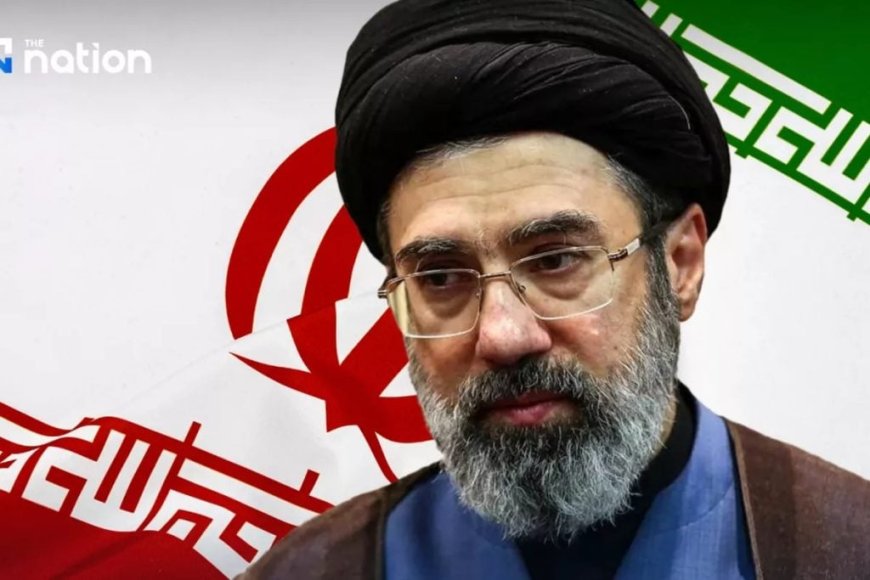
Iran’s newly appointed supreme leader, Mojtaba Khamenei, has issued his first public statement since assuming leadership after the assassination of his father, Ali Khamenei. In the message broadcast on state television, he urged national unity, praised Iran’s military forces, and warned that U.S. bases in the Middle East could face attacks if tensions continue to escalate. Khamenei also suggested that the strategic Strait of Hormuz would remain closed as a means of pressuring Iran’s adversaries. The statement comes as the region faces growing instability, with analysts questioning Iran’s political direction and the implications for global security and energy markets.
The statement, broadcast on Iranian state television and read aloud on Press TV, outlined the new leader’s position on the unfolding conflict, Iran’s strategic priorities, and the broader geopolitical situation. In his remarks, Mojtaba Khamenei called on the Iranian population to remain united during what he described as one of the most challenging periods in the country’s modern history. He also reiterated Tehran’s determination to resist external pressure and maintain its strategic leverage in the region.
A New Leader Emerges During Wartime
The rise of Mojtaba Khamenei marks a significant turning point in Iranian politics. Following the death of Ali Khamenei in Tehran on February 28, Iran’s clerical body responsible for selecting the supreme leader, the Assembly of Experts, convened to determine his successor. After deliberations, the assembly announced that Mojtaba Khamenei had been chosen to lead the Islamic Republic, making him the third supreme leader since the country’s 1979 Islamic Revolution. (Wikipedia)
The transition occurred under extraordinary circumstances, as Iran faced direct military confrontation with the United States and Israel. The assassination of Ali Khamenei and members of his family was widely viewed by Iranian officials as a deliberate escalation by Tehran’s adversaries. In response, Iranian leaders vowed retaliation and framed the conflict as a struggle for national sovereignty and survival.
A Call for National Unity
In his first message, Mojtaba Khamenei emphasized the importance of unity among the Iranian people. He urged citizens to stand together and support the country’s armed forces as they confront external threats.
According to the statement, the country is currently under immense pressure, both militarily and economically. The new leader expressed gratitude to Iranian soldiers and commanders, praising their efforts to defend the nation during a period of intense hostilities.
Khamenei commended what he described as the “bravery and dedication” of Iran’s military forces, saying their actions had prevented the country from being weakened or divided despite sustained attacks. He stressed that the Iranian government remains committed to defending its territorial integrity and political independence.
The Strait of Hormuz as Strategic Leverage
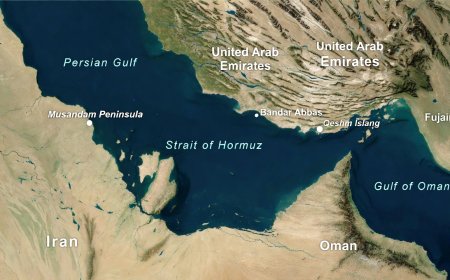
One of the most significant aspects of Khamenei’s statement concerned the future of the Strait of Hormuz, a narrow waterway connecting the Persian Gulf with the Gulf of Oman. This maritime passage is widely regarded as one of the most critical global energy routes, with a substantial portion of the world’s oil shipments passing through it each day.
Khamenei indicated that Iran intends to keep the strait closed as a means of exerting pressure on its adversaries. The decision has major implications for global energy markets and international trade, as disruptions in the waterway could significantly affect oil supplies worldwide. (Reuters)
By maintaining control over the strait, Iran hopes to strengthen its negotiating position and compel rival powers to reconsider their military and political strategies in the region. Analysts note that this approach reflects a long-standing Iranian tactic of using strategic geography to influence global economic and diplomatic dynamics.
Warnings to U.S. Military Presence
In addition to addressing maritime security, the new supreme leader delivered a direct warning regarding the presence of American military bases across the Middle East. He stated that all United States military facilities in the region should be closed immediately, warning that failure to do so could result in further attacks.
The remarks highlight the ongoing confrontation between Tehran and Washington, which has intensified since the beginning of the war. Iranian officials argue that foreign military bases near their borders represent a direct threat to national security.
Despite the strong language, Khamenei also noted that Iran seeks friendly relations with neighboring countries. However, he maintained that any state hosting American forces could become a target if those bases are used to launch attacks against Iran.
Regional Alliances and Armed Groups
Khamenei’s statement also referenced allied groups across the Middle East that have historically aligned themselves with Iran’s political and military objectives. He suggested that armed factions in Yemen and Iraq may play a role in supporting Iran’s broader strategy during the conflict.
These remarks reflect the complex network of regional alliances that has long shaped Middle Eastern geopolitics. For decades, Iran has cultivated relationships with various non-state actors and political movements throughout the region. Supporters describe these groups as part of a “resistance axis,” while critics argue they contribute to instability and proxy warfare.
Divisions Within Iranian Society
Despite Khamenei’s call for unity, observers say Iranian society remains deeply divided over the circumstances surrounding his rise to power. Economic challenges, including inflation and unemployment, had already triggered waves of protests in recent months.
Analysts argue that many ordinary Iranians are more concerned with domestic issues such as economic reform, governance, and social stability than with prolonged military confrontation. According to some experts, the new leader’s focus on armed resistance may sidestep these internal concerns.
Political analyst Zeidon Alkinani noted that emphasizing military struggle allows the government to avoid deeper debates about structural reforms that could address long-standing economic grievances.
Conflicting Signals Within Iran’s Leadership
Another notable aspect of the situation is the apparent difference in tone between Khamenei’s statement and remarks previously made by Masoud Pezeshkian, Iran’s president. Pezeshkian had recently suggested that Tehran might be open to ending the war if certain conditions were met.
This divergence has led some observers to question whether Iran’s leadership is fully aligned on the path forward. While the president hinted at possible negotiations, the supreme leader’s statement appeared to reaffirm a more confrontational stance toward the United States and Israel.
Questions About the New Leader’s Public Presence
Adding to the uncertainty surrounding Iran’s leadership, the message was not delivered directly by Mojtaba Khamenei himself. Instead, it was read by a broadcaster on state television.
This unusual presentation has fueled speculation about the new leader’s health and security. Rumors circulating in political circles suggest he may have been injured during the ongoing conflict, though no official confirmation has been provided.
Experts say the absence of a direct appearance could raise questions about the stability and authority of the new leadership at a time when Iran faces unprecedented challenges.
International Reactions and Strategic Implications
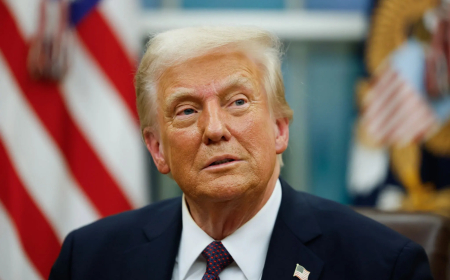
The statement is also unlikely to ease tensions with the United States. American President Donald Trump has repeatedly suggested that Iran should adopt a more cooperative leadership willing to meet Washington’s demands.
Instead, Mojtaba Khamenei’s remarks appear to reaffirm many of the policies associated with his father’s rule. Security experts note that his message signals continuity rather than change in Iran’s strategic outlook.
Rob Geist Pinfold, an international security lecturer at King’s College London, described the statement as a clear indication that Iran intends to maintain its established positions despite the leadership transition.
According to Pinfold, the speech suggests that expectations of a softer or more conciliatory Iranian leadership following the succession may be unrealistic.
A Region on Edge
As the conflict continues to escalate, the Middle East remains on edge. The combination of leadership transition, military confrontation, and economic disruption has created a volatile situation with far-reaching consequences.
The closure of the Strait of Hormuz alone has already begun to affect global energy markets, with oil prices rising sharply due to fears of prolonged supply disruptions. At the same time, ongoing attacks and counterattacks across the region have raised concerns about a broader war that could involve additional countries.
For Iran, the coming months will likely define the early legacy of Mojtaba Khamenei’s leadership. His first statement as supreme leader signals a continuation of resistance and confrontation, but it also highlights the immense challenges facing the country internally and externally.
Whether Iran’s new leader can navigate these pressures while maintaining stability at home remains one of the most pressing questions in Middle Eastern politics today.