No to War: Spain Leader Defies Trump’s Trade Threat and Defends International Law
Spanish Prime Minister Pedro Sánchez delivers a firm response to US President Donald Trump’s trade threat, reaffirming Spain’s opposition to war and defending international law amid rising tensions over Iran, NATO spending, and transatlantic relations.
 admin
admin
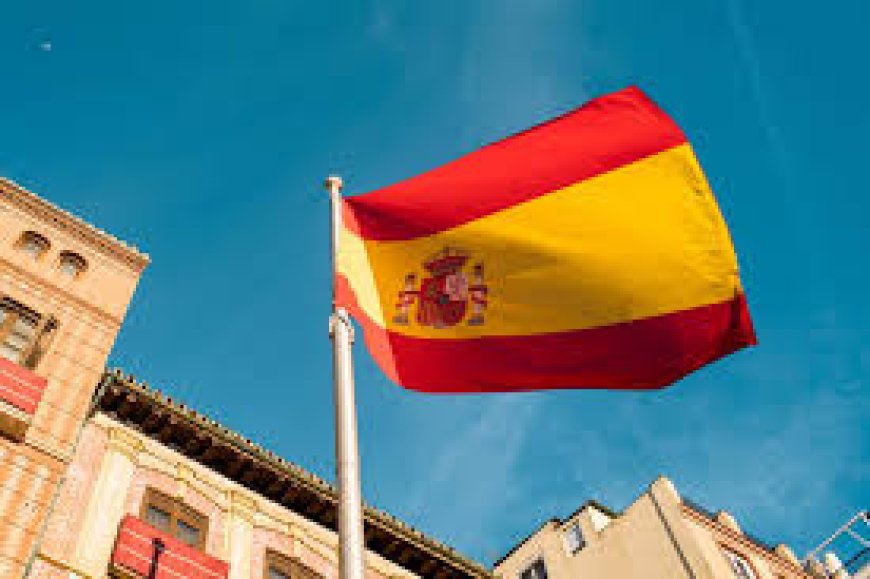
In a forceful and carefully structured televised address from the Palacio de la Moncloa in Madrid, Spanish Prime Minister Pedro Sánchez delivered one of the most direct rebukes yet to recent threats made by US President Donald Trump. The speech, which lasted approximately ten minutes, was framed not as a partisan rebuttal but as a broader reflection on Spain’s long-standing foreign policy principles. At its core was a simple but resonant message: “no to war.”
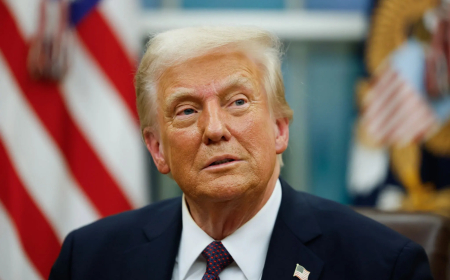
The diplomatic rift between Madrid and Washington escalated after Trump threatened to sever trade relations with Spain, accusing the country of being an unreliable partner. The US president’s remarks came during a meeting with German Chancellor Friedrich Merz, where he criticized Spain’s refusal to permit the use of jointly operated military bases at Morón and Rota for potential strikes against Iran. According to Trump, Spain had been “terrible,” and he suggested that the United States would “cut off all trade” and disengage economically.
Sánchez’s response, however, did not directly dwell on the trade threat. Instead, he broadened the lens to examine what he described as a troubling erosion of international law and multilateral norms. By invoking conflicts in Ukraine and Gaza, as well as the 2003 invasion of Iraq, he sought to contextualize Spain’s current position within a longer historical trajectory. His argument was not that Spain supported Iran—he explicitly rejected that notion—but that international disputes must be resolved within legal frameworks rather than through unilateral military action.
“The question is not whether we are aligned with the ayatollahs,” Sánchez stated, in a pointed clarification. “No one is.” Rather, he argued, the true issue at stake was whether the global community remained committed to peace and legality. He warned that responding to one violation of international law with another only deepens instability and risks repeating the catastrophic errors of the past.
This reference to history was deliberate and politically significant. Spain’s experience during the Iraq War remains a defining chapter in its modern political memory. In 2003, then-Prime Minister José María Aznar aligned Spain with the United States and the United Kingdom in support of the invasion. The meeting of the so-called “Azores trio”—comprising US President George W. Bush, UK Prime Minister Tony Blair, and Aznar—took place just days before military operations began. The decision was deeply unpopular within Spain and triggered massive anti-war protests across the country.
Many analysts believe that the public backlash against the Iraq War contributed significantly to the Spanish Socialist Workers’ Party’s unexpected victory in the 2004 general election, held only days after Madrid suffered devastating terrorist attacks. By referencing that period, Sánchez was not merely recalling history; he was invoking a collective memory that continues to shape Spanish attitudes toward foreign interventions.
The current standoff with Washington also intersects with Spain’s position within NATO. Trump criticized Madrid for failing to meet a proposed defense spending benchmark of five percent of GDP, labeling Spain an inadequate ally. Spain, like several other NATO members, has faced pressure to increase military expenditure in response to shifting global security dynamics. However, Sánchez has maintained that security cannot be measured solely in terms of defense budgets and that diplomacy remains an essential instrument of stability.
Germany’s Merz, for his part, reportedly told Trump that it would not be possible to strike a separate trade arrangement with Germany or Europe while excluding Spain, reinforcing the European Union’s principle of solidarity among member states. That message of unity was echoed by French President Emmanuel Macron, who expressed his support for Spain in a phone call with Sánchez. European Council President António Costa also conveyed what he described as the EU’s “full solidarity.”
The contrast between Spain and some of its allies has been striking. While Merz suggested in a televised interview that regime change in Iran might leave the world “a little better off,” albeit not without risks, Sánchez refrained from endorsing any military objective. Unlike NATO partners such as the United Kingdom, France, and Greece, Spain has so far declined to commit to military participation in any escalation related to the Iran crisis.
Spain’s position is consistent with its recent foreign policy record. Sánchez has been outspoken regarding the conflict in Gaza, criticizing Israel’s military response following the Hamas attacks in 2023. Spain was among the earliest European governments to formally recognize a Palestinian state and has described certain Israeli actions as amounting to genocide—a stance that placed it at the forefront of European criticism. Domestically, this posture has resonated with Sánchez’s coalition partners on the left and with broad segments of Spanish public opinion.
Yet the prime minister’s political standing at home remains fragile. His coalition government depends on a delicate parliamentary majority that includes left-wing and regional nationalist parties. Allegations of corruption involving political allies and figures within his inner circle have intensified scrutiny and fueled speculation about the government’s durability. In Spain’s polarized political environment, support for Sánchez often reflects apprehension about the alternative—particularly the rise of right-wing and far-right forces—rather than unqualified endorsement of his leadership.
In this context, confronting Trump may carry both risks and rewards. A recent poll conducted by Spain’s Center for Sociological Research (CIS) found that an overwhelming majority of Spaniards—approximately 77 percent—hold a negative view of the US president. That statistic suggests that even voters who might otherwise oppose Sánchez could support a firm defense of Spanish sovereignty against external pressure.
At the same time, uncertainty looms over the economic dimension of the dispute. Spain and the United States maintain substantial trade ties, and the prospect of punitive tariffs or a broader embargo raises concerns within key sectors of the Spanish economy. While Sánchez did not directly address the possibility of specific countermeasures, he indicated that the government was studying options to mitigate any adverse impact on Spanish citizens.
The broader implications extend beyond bilateral relations. The episode underscores ongoing tensions within the transatlantic alliance and raises questions about the future of multilateral cooperation. For Sánchez, the central message was that adherence to international legality is not a sign of weakness but of principle. “You cannot answer one illegality with another,” he cautioned, emphasizing that cycles of retaliation historically have led to deeper instability rather than durable solutions.
Whether Trump’s threats will translate into concrete economic action remains uncertain. What is clear, however, is that Spain has chosen to frame its response not in transactional terms but as a matter of principle rooted in historical experience. By invoking past conflicts and reaffirming a commitment to peace, Sánchez positioned Spain as a defender of international law at a moment when global norms appear increasingly strained.
For many Spaniards watching the unfolding drama, the situation evokes a familiar dilemma: how to balance alliance commitments with national sovereignty and moral conviction. As events continue to develop, both governments will face pressure—from markets, allies, and domestic constituencies—to clarify their next steps. In the meantime, Sánchez’s televised address has set the tone for Spain’s official stance: cautious, historically informed, and unequivocally opposed to war as a solution to geopolitical crises.