Middle East Conflict Could Escalate Beyond Control - UN Chief Warns
UN Secretary-General António Guterres has warned that the escalating Middle East conflict could spiral beyond control, urging immediate diplomatic efforts to prevent further humanitarian suffering, economic disruption, and regional instability as missile attacks and military responses continue across the region.
 admin
admin
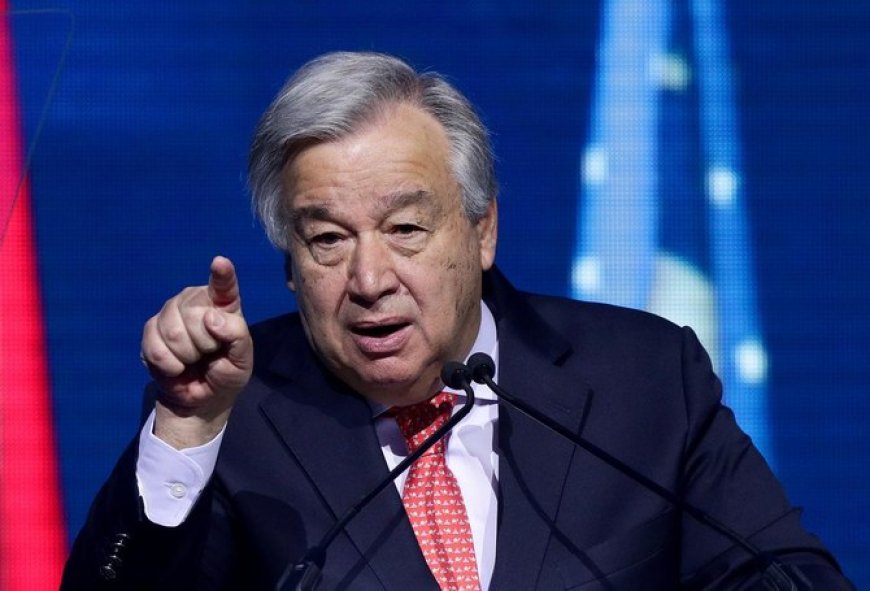
Global tensions in the Middle East continue to raise alarm among international leaders, with the Secretary-General of the United Nations, António Guterres, cautioning that the ongoing hostilities could rapidly escalate if diplomatic efforts fail to intervene.
Speaking amid growing instability across the region, Guterres stressed that the consequences of the conflict extend far beyond national borders. He warned that the situation could deteriorate to a point where it becomes difficult for global powers to contain.
According to the UN chief, the humanitarian and economic implications of the crisis are becoming increasingly severe, especially for civilians who remain caught in the crossfire.
Call for Immediate De-escalation
In a message shared publicly, Guterres emphasized that the current trajectory of the conflict poses significant risks not only to regional stability but also to the global economy.
He noted that repeated attacks across the region are causing extensive hardship for civilians and disrupting economic systems that many vulnerable communities depend on.
The UN leader urged all parties involved to prioritize diplomacy over continued military escalation.
“The stakes could not be higher,” he warned, stressing the urgent need for dialogue and negotiations to halt the violence before it spirals further out of control.
He also highlighted the broader consequences that prolonged instability could bring, including rising economic uncertainty, increased displacement, and further strain on humanitarian resources.
Humanitarian Concerns Continue to Grow
Concerns about the humanitarian toll of the conflict were echoed by Tom Fletcher, the UN’s Under-Secretary-General for Humanitarian Affairs and Emergency Relief Coordinator.
Fletcher criticized the enormous financial resources being directed toward military operations while humanitarian assistance budgets continue to shrink.
He warned that the world is witnessing a troubling combination of advanced technology and modern warfare, which together are making conflicts increasingly destructive.
According to Fletcher, the use of sophisticated weaponry has intensified the scale and speed of attacks, raising the potential for widespread civilian harm.
Humanitarian organizations are also struggling to maintain relief operations as insecurity grows and funding becomes more limited.
Security Situation in Israel
In Israel, security alerts remain part of daily life as authorities monitor threats and maintain defensive measures.
Air raid sirens continue to sound in various areas, prompting residents to seek shelter as precautionary steps against possible attacks. However, officials say that the intensity of recent retaliatory strikes from Iran appears to have reduced compared with earlier phases of the confrontation.
Most incoming missiles, according to Israeli defense officials, have been intercepted by air defense systems designed to protect populated areas.
As a result, authorities have begun easing some emergency restrictions that had been imposed during the height of the tensions.
In the commercial hub of Tel Aviv, daily activities have gradually resumed. Streets, cafes, and retail outlets have reopened, presenting a sharp contrast to the uncertainty that continues to affect other parts of the region.
Despite the ongoing tensions, domestic political debate within Israel regarding the military response has remained relatively limited.
Prime Minister Benjamin Netanyahu has faced little open criticism from political rivals over the decision to engage in military action, and public discussion about long-term strategy remains subdued.
Missile Activity and Military Alerts
Meanwhile, the Israel Defense Forces (IDF) reported detecting additional missiles launched toward Israeli territory.
In an official statement, the military said defensive systems were activated to intercept the incoming threats.
Authorities instructed residents in affected areas to move into protected spaces and remain there until further notice. Alerts were also sent directly to mobile devices to ensure the public received timely safety instructions.
Military officials reiterated that civilians should only leave protected areas once official clearance has been given.
International Military Presence Expands
The ongoing crisis has also prompted responses from international partners monitoring developments in the region.
The United Kingdom Ministry of Defence confirmed that additional fighter aircraft would be deployed as part of efforts to safeguard British interests in the Middle East.
According to the ministry, four additional Eurofighter Typhoon jets were scheduled to arrive in Qatar overnight to support regional security operations.
Earlier in the day, Wildcat helicopters equipped with anti-drone capabilities were also reported to have arrived at a military facility in Cyprus.
British defense officials stated that their aircraft had recently conducted patrols over areas including Qatar, Jordan, and the eastern Mediterranean.
Regional Reactions and Strategic Shifts
Analysts say the ongoing conflict is also reshaping diplomatic relationships across the Gulf region.
According to observers, missile and drone attacks attributed to Iran have increased tensions with several Gulf Arab states, some of which had previously tried to prevent further escalation.
Regional governments had reportedly urged Washington to avoid launching military operations from bases located on their territories.
However, analysts believe that the continued security threats may be prompting some states to reconsider those restrictions.
Despite this shift, many Gulf countries are still reluctant to become directly involved in military action.
Their primary concern remains the potential economic fallout that a prolonged war could bring.
Economic Risks for Global Markets
Energy markets and global trade routes are among the areas most vulnerable to disruption if the conflict continues to intensify.
Saad Sherida Al‑Kaabi, Qatar’s energy minister, recently warned that escalating hostilities could have severe consequences for the world economy.
He cautioned that prolonged instability in the region might force energy exporters to suspend production, which could significantly impact global supply.
Energy exports from Gulf countries play a vital role in global markets, and any major disruption could lead to rising fuel prices and broader economic instability.
Reports also suggest that some regional governments are reviewing major investment plans due to the financial pressures associated with the conflict.
Countries such as Qatar, the United Arab Emirates, and Saudi Arabia have previously announced large-scale investment commitments abroad, including in the United States.
However, analysts say ongoing military tensions could strain national budgets and lead to adjustments in those investment strategies.
Growing Calls for Diplomacy
As the conflict continues to evolve, international leaders and humanitarian organizations are increasingly urging restraint.
The United Nations and other diplomatic actors have emphasized that dialogue remains the most viable path toward reducing tensions and preventing further escalation.
Observers warn that without sustained diplomatic engagement, the risk of broader regional conflict remains significant.
For millions of civilians living across the Middle East, the hope is that political leaders will prioritize negotiations and work toward a peaceful resolution before the crisis deepens further.