El-Rufai Files N1bn Rights Suit Against ICPC Over Abuja Residence Search
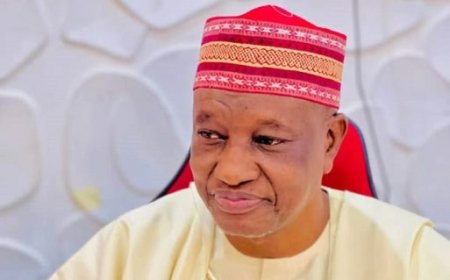
Former Kaduna State Governor Nasir El-Rufai has filed a N1 billion fundamental rights enforcement suit against the ICPC, challenging the legality of a search warrant and the alleged unlawful search of his Abuja residence. The case, before the Federal High Court in Abuja, also questions the commission’s procedures during an ongoing investigation.
 admin
admin

Former Kaduna State Governor Challenges ICPC Over Alleged Unlawful Search of Abuja Residence
Former Governor of Kaduna State, Mallam Nasir El-Rufai, has initiated a legal action asserting a violation of his fundamental rights against the Independent Corrupt Practices and Other Related Offences Commission (ICPC). The suit arises from claims that operatives of the anti-corruption body unlawfully entered and conducted a search of his private residence in Abuja, raising concerns about procedural irregularities and potential overreach by the agency.
The case, formally filed under the number FHC/ABJ/CS/345/2026 at the Federal High Court, Abuja, specifically seeks to challenge the validity of a search warrant that was issued on February 4 by a Magistrate Court of the Federal Capital Territory. The warrant had purportedly authorized ICPC officers to search El-Rufai’s home and seize certain items deemed relevant to an ongoing investigation.
Represented by a legal team led by Oluwole Iyamu, El-Rufai is requesting the court to formally declare the search warrant null and void. The suit also demands that any action executed pursuant to the warrant, including the seizure of property or other investigative measures, be invalidated. According to the former governor’s legal team, the ICPC’s method of conducting the operation deviated from established legal procedures and, in doing so, infringed upon his constitutionally protected rights.
Reports indicate that the former governor has been held in ICPC custody since Wednesday, February 18, as part of the commission’s ongoing inquiries. Despite this detention, the ICPC has not publicly disclosed the specific nature of the allegations under investigation, leaving the exact scope of the case largely undefined to the public.
In the wake of the search, El-Rufai’s media aide, Muyiwa Adekeye, confirmed through social media that the former governor’s residence, located on Aso Drive, Abuja, had been accessed by ICPC operatives. Commenting on the incident, one of El-Rufai’s legal representatives, Ubong Akpan, criticised the manner in which the operation was carried out, labelling it unlawful and a breach of due process as well as a violation of fundamental rights guaranteed under Nigerian law.
The legal challenge underscores broader debates around the balance between the authority of anti-corruption agencies and the protection of individual constitutional rights. Legal analysts suggest that the outcome of this case may have significant implications for how law enforcement agencies conduct operations against high-profile public figures and could set a precedent for the interpretation of search and seizure powers in Nigeria.
As the matter unfolds, attention remains focused on both the legal arguments presented in court and the potential ramifications for governance, accountability, and civil liberties. Observers are keenly awaiting the court’s ruling, which could clarify the limits of anti-corruption enforcement measures and reinforce protections for citizens against unlawful intrusions.