
Deadly Raid in Northwestern Nigeria: Dozens Killed, Women and Children Abducted
At least 50 people were killed and several women and children abducted after armed men attacked Tungan Dutse village in Zamfara state, Nigeria. The assailants, arriving on over 150 motorcycles, burned buildings and shot residents during a 10-hour raid despite prior warnings to security forces.

At Least 50 Dead, Dozens Abducted in Zamfara Village Attack Amid Escalating Northern Nigeria Violence
MAIDUGURI, Nigeria — A violent raid on the rural community of Tungan Dutse has left at least 50 residents dead and an unknown number of women and children abducted, according to a local legislator. The attack, carried out by armed groups operating across northwestern Nigeria, highlights the intensifying insecurity in the region and the growing threat posed to rural communities.
Hamisu A. Faru, representing the Bukkuyum South constituency in the Zamfara State House of Assembly, reported that the assault began around 5:00 p.m. on Thursday and continued until approximately 3:30 a.m. on Friday. The attackers systematically set fire to homes and opened fire on residents attempting to flee, leaving a trail of destruction and terror.
"The attackers are moving from one village to another, leaving at least 50 people dead," Faru said in a telephonic interview. He added that the exact number of abducted individuals remains unconfirmed, as local authorities and traditional leaders are conducting a detailed headcount to ascertain the total number of missing persons.
Eyewitness Accounts Paint a Grim Picture
Abdullahi Sani, a 41-year-old resident of Tungan Dutse, recounted the harrowing ordeal, confirming the deaths of three members of his family. "No one slept last night; we are all in pain," Sani said. He further alleged that prior warnings to security forces went unheeded. Residents had reportedly observed a convoy of over 150 motorcycles transporting armed fighters a day before the assault and had promptly informed both local government officials and security personnel.
"There were warnings," Sani stated. "We told the authorities, but nothing was done. By the time the attack came, it was too late. Many of us had nowhere to run."
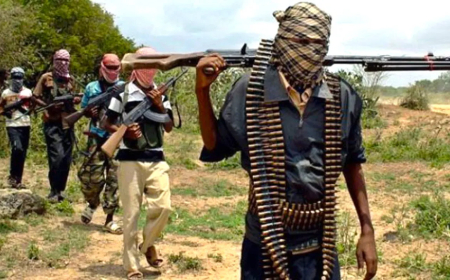
The systematic nature of the attack—including premeditated arson and coordinated assaults on fleeing residents—underscores the increasing sophistication of armed groups in the region, often referred to as "bandits" in local and national discourse.
Security Forces Yet to Confirm
At the time of reporting, official confirmation from the Zamfara State Police Command was not available. Requests for comments from the police spokesperson were unanswered, leaving the precise number of casualties and abducted individuals largely dependent on local accounts.
This communication gap reflects a broader challenge facing Nigerian security agencies, who struggle to respond effectively to attacks in remote and densely forested areas that provide concealment for armed groups. Analysts have consistently highlighted the difficulties posed by the terrain, limited personnel, and inadequate resources, all of which enable bandits to execute attacks with impunity.
Escalating Violence in Northwestern Nigeria
The Tungan Dutse incident is emblematic of a wider security crisis in northwestern Nigeria, where armed groups have increasingly engaged in mass killings, kidnappings for ransom, and the systematic displacement of rural populations. These attacks have disrupted local economies, destroyed farmland, and eroded the social fabric of affected communities.
Communities across Zamfara, Katsina, Sokoto, and Kebbi states have been repeatedly targeted in similar raids, with assailants often using motorcycles to navigate difficult terrain and evade capture. Residents frequently report seeing armed convoys prior to attacks, yet responses by security forces are often delayed or inadequate, exacerbating the impact on civilian populations.
Humanitarian and Social Impact
Beyond the immediate loss of life and property, the attack has inflicted profound psychological trauma on survivors. Families are now faced with the dual challenge of mourning the dead while coping with the uncertainty surrounding abducted relatives. In addition, the displacement of residents from Tungan Dutse threatens agricultural cycles and livelihoods, as many affected households rely on subsistence farming for both income and sustenance.
Local leaders and humanitarian organizations have emphasized the urgent need for protective measures, including the deployment of security forces to vulnerable communities, emergency relief for displaced residents, and proactive intelligence gathering to prevent further attacks.
Government Under Pressure
The Tungan Dutse massacre adds to mounting pressure on the Nigerian government to implement effective security measures in the northwestern states. Civil society groups, human rights organizations, and local officials have repeatedly called for comprehensive strategies to address both immediate threats and the underlying factors driving banditry, including poverty, unemployment, and the proliferation of small arms.
"The people of Tungan Dutse have suffered greatly," said a local activist familiar with the incident. "This is not an isolated case. Without sustained interventions—both military and socio-economic—these attacks will continue, leaving countless families displaced and communities destabilized."
A Region in Crisis
For residents of Tungan Dutse, the immediate concern is survival and recovery. As authorities work to confirm the number of missing and deceased, the community remains in shock, grappling with grief, fear, and uncertainty.
The attack underscores a grim reality in parts of northwestern Nigeria: a combination of armed banditry, inadequate security infrastructure, and fragile governance has created conditions in which rural communities are increasingly exposed to mass violence. Until robust and coordinated responses are implemented, the threat to life and property in vulnerable villages like Tungan Dutse is likely to persist.












Comments (0)