Oil prices drop while stocks climb as the U.S. moves toward ending the Iran war.
Global energy markets experienced a shift as oil and gas prices fell following comments from Donald Trump suggesting the conflict involving Iran may soon end. The decline in energy prices triggered a rebound in global stock markets including the FTSE 100, while investors continued to monitor tensions surrounding the Strait of Hormuz, a crucial route for global oil supply.
 admin
admin
Global financial markets experienced a wave of relief on Tuesday as energy prices declined and stock markets rebounded after remarks from former U.S. President Donald Trump suggesting that the ongoing conflict involving Iran could soon come to an end. The statement appeared to calm investors who had been increasingly concerned about the potential long-term impact of the conflict on global energy supplies, particularly those originating from the Middle East.
Oil Prices Retreat After Recent Surge
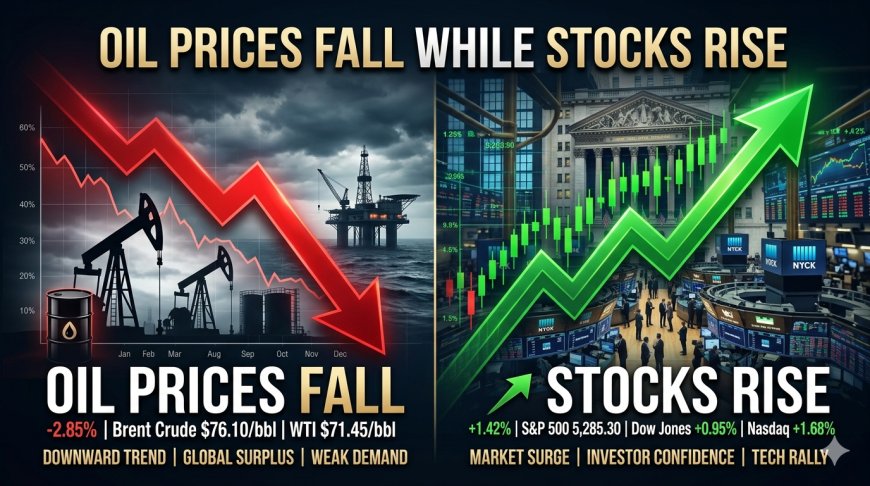
Earlier in the week, global oil markets had witnessed a sharp surge in prices. On Monday, crude oil prices climbed to nearly $120 per barrel, fueled by fears that the conflict might severely disrupt the flow of oil from one of the world’s most critical energy-producing regions. However, the market sentiment shifted dramatically after Trump indicated that the military situation might be nearing resolution.
Following these remarks, crude prices dropped significantly, falling to around $92 per barrel. Although this represents a substantial decrease compared with Monday’s peak, prices remain notably higher than they were before hostilities began.
The international oil benchmark Brent Crude briefly dipped below $84 per barrel during trading before stabilizing at approximately $92.45 later in the day. Market analysts noted that the rapid movement highlights the sensitivity of energy markets to geopolitical developments.
European Markets Rebound
The easing of energy prices had a positive impact on equity markets, particularly across Europe. Investors responded to the perceived reduction in geopolitical risk by moving back into stocks.
In the United Kingdom, the benchmark FTSE 100 rose by 1.3%, reflecting renewed confidence among traders and institutional investors. Similar optimism spread across the continent.
Germany’s DAX index recorded an increase of 2.1%, while France’s CAC 40 climbed 1.4%. These gains mirrored earlier rallies in both American and Asian markets, suggesting a coordinated global response to easing tensions.
Earlier trading in Asia also showed strong recovery signs. Japan’s Nikkei 225 rose 2.9%, recovering a portion of the losses experienced the previous day. Meanwhile, South Korea’s Kospi surged 5.4%, reflecting renewed investor appetite for risk.
Trump Signals Possible End to Hostilities
Speaking at a press conference in Florida, Trump indicated that the military action had largely achieved its intended objectives.
He described the situation as “pretty much complete,” suggesting that the conflict could soon wind down. Trump characterized the operation as a necessary but limited intervention, stating that it was carried out to eliminate perceived threats.
“We took a little excursion because we felt we had to do that to get rid of some evil,” he said. “I think you’ll see it’s going to be a short-term excursion.”
Despite this optimistic tone, Trump also issued a stern warning to Iran against interfering with global oil transportation routes.
Strategic Importance of the Strait of Hormuz
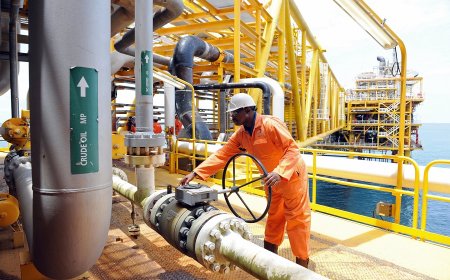
A central concern for global markets remains the status of the Strait of Hormuz, one of the most strategically vital shipping lanes in the world. Approximately 20% of the global oil supply passes through this narrow waterway connecting the Persian Gulf with international waters.
Trump warned that any attempt by Iran to block the route would trigger a severe response from the United States. In a social media post, he declared that Iran would face consequences “twenty times harder” than previous military actions if it attempted to halt oil shipments.
In response, the Islamic Revolutionary Guard Corps rejected Trump’s statements and warned that Iran’s armed forces would take decisive action if provoked. The organization asserted that it would not allow oil exports from the region to proceed if Iranian interests were threatened.
Since the conflict began more than a week ago, shipping activity through the Strait of Hormuz has slowed dramatically, raising fears about prolonged disruptions in global energy supply chains.
Gas Prices Also Fall
The easing of tensions also affected natural gas markets. In the United Kingdom, prices for gas scheduled for delivery in the coming month fell sharply.
Contracts dropped to 126 pence per therm, significantly lower than Monday’s peak of 171 pence per therm. Analysts say this decline reflects the same market sentiment that drove oil prices lower—namely, the belief that the worst-case scenario of prolonged conflict may be avoided.
Nevertheless, experts caution that the situation remains extremely fragile.
Market Analysts Warn of Continued Volatility
Energy market specialists say the sudden price swings demonstrate how uncertain the current environment remains.
Alberto Bellorin, founder and managing director of the investment firm InterCapital Energy, described the market as being in a “total tug-of-war.” According to him, traders are constantly reacting to new information about the conflict and its potential impact on supply.
Bellorin explained that oil markets are likely to remain highly volatile in the near term. Prices could rise rapidly if tensions escalate again, particularly if shipping routes are disrupted or additional military actions occur. Conversely, signs of de-escalation could push prices down further.
In other words, the global energy market is currently operating in a highly reactive mode where geopolitical headlines have an immediate impact on trading behavior.
Concerns Over Global Oil Supply
Industry leaders have also raised concerns about the broader implications of continued supply disruptions.
Saudi Aramco, the world’s largest oil exporter, warned that the situation could have serious consequences for the global economy if the Strait of Hormuz remains blocked or severely restricted.
The company’s chief executive, Amin Nasser, noted that global oil inventories are already at their lowest level in five years. If the conflict continues to disrupt supply, countries may begin consuming their reserves at a faster pace than anticipated.
Nasser warned that the longer such disruptions last, the more severe the consequences for energy markets and economic stability worldwide.
G7 Governments Consider Emergency Measures
In response to the sudden spike in energy prices earlier this week, leaders from the Group of Seven (G7) convened discussions with the International Energy Agency to evaluate possible actions to stabilize global energy markets.
One option under consideration was the release of oil from strategic national reserves. Such reserves are maintained by major economies as a safeguard against severe supply disruptions.
Although the issue was discussed extensively, no final decision was made during the meeting.
Energy analysts say governments may prefer to keep these reserves intact unless the crisis worsens significantly. Strategic stockpiles are generally viewed as a last resort because they are difficult to replenish quickly.
Robin Mills, chief executive of the Dubai-based consultancy Qamar Energy, explained that policymakers are reluctant to deploy these reserves prematurely.
According to Mills, once emergency reserves are used, rebuilding them can take years. Therefore, governments must carefully weigh whether the current situation truly warrants such action.
Economic Implications Beyond Energy Markets
The spike in oil prices earlier in the week also had ripple effects across financial markets. Investors began worrying that higher energy costs could drive inflation upward, forcing central banks to maintain higher interest rates.
In the United Kingdom, for example, many financial analysts had previously expected interest rate cuts later this year. However, those expectations faded when oil prices surged, raising concerns that inflation could accelerate again.
Bond markets reflected these shifting expectations. The yield on two-year UK government bonds—which indicates borrowing costs for the government—rose sharply to 4.15% on Monday before easing slightly to 3.91% after oil prices retreated.
Before the conflict began, that yield had been closer to 3.5%, highlighting how quickly geopolitical tensions can influence financial markets.
Calls for De-Escalation
Political leaders continue to emphasize the importance of reducing tensions in the region. The United Kingdom’s Chancellor, Rachel Reeves, stated that her government used recent international meetings to urge immediate de-escalation and ensure safe passage for ships operating in the Gulf.
Reeves also indicated that the UK would support a coordinated release of oil reserves if necessary, in cooperation with other member states of the International Energy Agency.
Outlook for the Global Economy
While Tuesday’s decline in energy prices provided some relief to investors, the broader outlook remains uncertain. Much will depend on whether the conflict truly winds down as Trump suggested or whether new developments reignite fears of supply disruptions.
For now, markets appear cautiously optimistic. Investors are closely monitoring diplomatic signals, military developments, and shipping activity in the Strait of Hormuz.
As history has repeatedly shown, geopolitical events in the Middle East can have far-reaching consequences for global energy markets and economic stability. The coming weeks will likely determine whether the recent market recovery represents a genuine turning point—or merely a temporary pause in a volatile period for the global economy.