US Floods Middle East with Stealth Jets Amid Iran Standoff as Trump warns Iran of obliteration over assassination threat.
Amid indirect nuclear talks in Geneva, the US sends over 50 fighter jets including F-35s to the Middle East, as a stark directive warns Iran of "complete obliteration" in response to any assassination plot.
 admin
admin
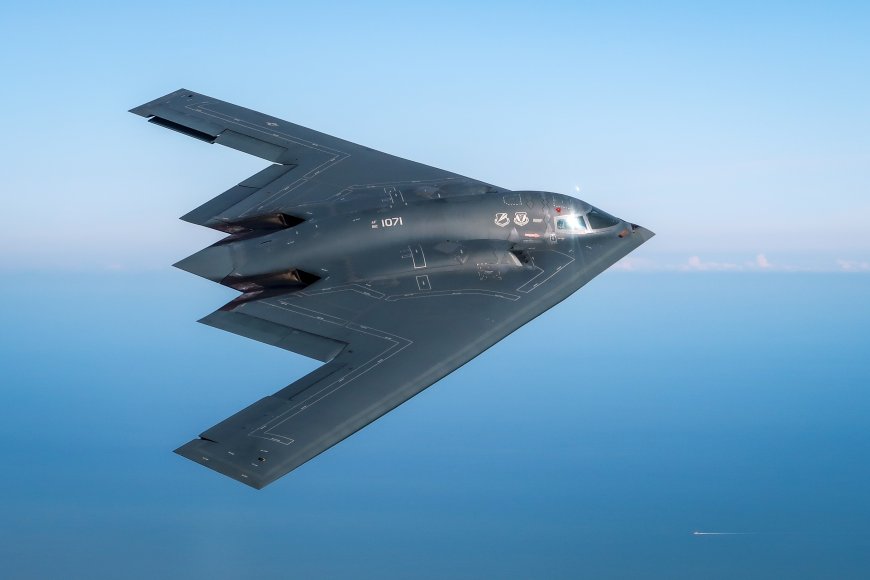
Trump Issues Stark Deterrence Warning as Pentagon Rapidly Deploys Over 50 Fighter Aircraft to Region
In a significant escalation of America's strategic posture toward the Islamic Republic of Iran, the United States has simultaneously pursued two seemingly contradictory tracks: a dramatic reinforcement of military assets across the Middle East coupled with renewed diplomatic engagement aimed at curbing Tehran's nuclear ambitions. This multifaceted approach, characterized by explicit deterrence messaging from the highest levels of American leadership and a substantial build-up of combat capabilities, unfolds against a backdrop of ongoing indirect negotiations that officials describe as productive yet fraught with substantial challenges.
The developments represent a critical juncture in the long-simmering confrontation between Washington and Tehran, raising questions about whether the United States is preparing for potential conflict or simply strengthening its bargaining position ahead of what could be pivotal diplomatic exchanges. Military analysts and diplomatic observers alike are closely scrutinizing the dual-track strategy, which combines overwhelming force projection with carefully calibrated offers of engagement.
Presidential Directive on Deterrence: A Message of Unprecedented Severity
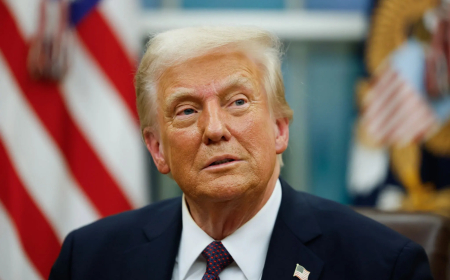
In what sources describe as a stark articulation of deterrence policy, former President Donald Trump has reportedly issued a directive stipulating that any assassination attempt against him by Iran would trigger overwhelming and comprehensive retaliation. The instruction, characterized in absolute terms by individuals familiar with its content, mandates the complete destruction of Iranian assets and infrastructure, with language suggesting that no element of the regime's power structure would remain intact should such an attack occur.
This declaration, while consistent with Trump's previously stated commitment to protecting American citizens and interests, carries particular weight given the historical context of tensions between the former president and Iranian leadership. During Trump's tenure, the administration authorized the January 2020 drone strike that killed Major General Qassem Soleimani, commander of the Quds Force and arguably Iran's most powerful military figure. Tehran subsequently vowed revenge, and American officials have remained vigilant about potential retaliatory plots targeting current and former officials associated with that decision.
The directive's absolute language—reportedly leaving no ambiguity about the scope of potential American response—appears designed to eliminate any miscalculation by Iranian leadership regarding the consequences of action against American targets. By threatening not merely retaliatory strikes but the complete destruction of Iranian infrastructure, the message seeks to raise the stakes of any aggressive action to a level that Tehran would find unacceptable.
"The language is intentionally maximalist," explained a former senior defense official familiar with deterrence strategy. "When you're dealing with adversaries who may calculate risks differently than Western powers, you need to remove any ambiguity about consequences. The message is: don't test this, because the response will be beyond anything you can imagine or prepare for."
Rapid Deployment of Air Assets: A Show of Force
Concurrent with this rhetorical escalation, the United States military has executed one of the most rapid and substantial reinforcements of aerial combat capabilities in the region in recent memory. According to a report by Axios citing a US official, over fifty fighter aircraft were redeployed to the Middle East within a compressed twenty-four-hour period, demonstrating the Pentagon's ability to project power with remarkable speed.
Independent flight tracking data has confirmed the movement of a mixed contingent of advanced fighter jets, including F-16 Fighting Falcons—workhorse multirole aircraft that have formed the backbone of American tactical aviation for decades; F-22 Raptors—fifth-generation stealth fighters designed for air superiority with capabilities that no potential adversary can match; and F-35 Lightning II aircraft—the most advanced joint strike fighters in the American inventory, featuring cutting-edge sensor fusion and stealth technology.
This rapid build-up augments an already significant American presence in the region, which includes the USS Abraham Lincoln carrier strike group deployed since January. Perhaps more significantly, the coming weeks will see the arrival of the USS Gerald R. Ford—the US Navy's largest and most advanced aircraft carrier, representing the pinnacle of American naval aviation capability—along with its accompanying strike group of cruisers, destroyers, and support vessels.
The Ford, which entered service in 2017, embodies the next generation of carrier technology. With enhanced sortie generation rates, improved electromagnetic aircraft launch systems, and reduced crew requirements compared to previous classes, the vessel can project power more efficiently and effectively than any carrier in history. Its deployment to the Middle East sends an unmistakable signal of American commitment to regional stability and the protection of vital interests.
Strategic Implications of the Military Build-Up
Military analysts have offered varying interpretations of the rapid force deployment, with some viewing it as preparation for potential offensive action while others see it primarily as deterrence designed to prevent Iranian miscalculation amid ongoing diplomatic engagements.
"This is classic coercive diplomacy," explained Dr. James Montgomery, a senior fellow at the Institute for Strategic Studies. "You build up your forces to demonstrate capability and resolve, which strengthens your bargaining position at the negotiating table. The message to Tehran is clear: we are prepared to pursue diplomatic solutions, but we are equally prepared to defend our interests and our people if diplomacy fails."
The composition of the deployed forces offers clues about American intentions. The inclusion of F-22 Raptors, which are optimized for air superiority rather than ground attack, suggests a focus on establishing and maintaining control of airspace—a prerequisite for any sustained military campaign. The F-35s, with their advanced sensing capabilities, can penetrate sophisticated air defense networks and strike high-value targets with precision. The F-16s provide the versatility needed for a range of missions from close air support to interdiction.
"The mix tells you they're preparing for every contingency," noted a retired Air Force general who requested anonymity to speak candidly about operational matters. "If you're just sending a message, you might send a few aircraft, make some noise, and call it a day. But fifty-plus aircraft in twenty-four hours, including the most advanced platforms we have? That's serious preparation for serious contingencies."
Parallel Diplomatic Track: Geneva Talks Show Progress Amid Persistent Challenges
While military assets flow into the region, diplomatic channels remain active. Indirect talks between American and Iranian officials were recently convened in Geneva, focusing on the central challenge that has defined US-Iran relations for decades: Tehran's nuclear program and the international community's efforts to prevent Iran from developing nuclear weapons capability.
A US official briefed on the discussions characterized the meetings as productive, offering a cautiously optimistic assessment that "progress was made" during the exchanges. However, the official was careful to temper expectations, emphasizing that substantive gaps remain between the parties' positions and that no breakthrough should be anticipated in the immediate future.
The Geneva talks follow a pattern established in previous negotiations, including those that produced the 2015 Joint Comprehensive Plan of Action (JCPOA), from which the Trump administration withdrew in 2018. Iran has since exceeded the nuclear limits established by that agreement, enriching uranium to higher levels and installing advanced centrifuges that reduce the time needed to produce weapons-grade material should Tehran choose to pursue a bomb.
A key outcome of the Geneva talks is an agreed-upon timeline for future negotiations. The US official stated that Iranian representatives have committed to presenting detailed written proposals within the next two weeks. These proposals are intended to address what officials describe as the "open gaps" between the parties' positions and provide a clearer pathway toward a potential understanding.
"We have a framework now for moving forward," the official explained. "The Iranians have indicated they will put concrete proposals on paper, and we will evaluate them seriously. But I want to be absolutely clear: a lot of work remains to be done to reach an agreement. This is not about imminent breakthroughs. It's about patient, sustained engagement to determine whether a mutually acceptable arrangement is possible."
The Nuclear Challenge: Technical Progress and Diplomatic Deadlines
The urgency of these diplomatic efforts is underscored by the continued advancement of Iran's nuclear program. According to International Atomic Energy Agency (IAEA) reports, Iran has accumulated a substantial stockpile of uranium enriched to 60 percent purity—a level that is only a technical step away from weapons-grade 90 percent enrichment. While Iranian officials insist their program is peaceful, the technical knowledge and infrastructure accumulated bring Tehran ever closer to nuclear weapons capability should political leaders make that decision.
This "breakout time"—the period Iran would need to produce sufficient weapons-grade material for a nuclear device—has shrunk dramatically since the JCPOA's collapse. Estimates vary, but most analysts agree that Iran could potentially produce enough material for one or more weapons within weeks if it chose to do so, though weaponization would require additional time and testing.
"The technical reality is that Iran is now a threshold nuclear state," observed a non-proliferation specialist who has followed the program for decades. "They have the knowledge, they have the material, they have the infrastructure. The only remaining question is political will—whether the leadership in Tehran decides that the benefits of a weapon outweigh the enormous costs that would follow."
The two-week timeline for Iranian proposals thus carries particular significance. Should Tehran present serious, verifiable commitments to roll back its nuclear advances in exchange for sanctions relief, a pathway to renewed diplomacy could emerge. Should the proposals prove insufficient or designed primarily to buy time while nuclear work continues, the United States and its allies will face difficult decisions about how to respond.
Regional Reactions and Allied Consultations
America's regional allies have watched these developments with a mixture of hope and anxiety. Gulf Arab states, including Saudi Arabia and the United Arab Emirates, have historically favored robust American deterrence against Iran while also supporting diplomatic efforts that could reduce regional tensions. The simultaneous military build-up and diplomatic engagement appears calibrated to address both concerns.
Israeli officials, who have repeatedly warned against allowing Iran to achieve nuclear weapons capability, have maintained close consultations with American counterparts throughout this period. Prime Minister Benjamin Netanyahu has long advocated for maximum pressure on Iran, including the threat of military action, while also acknowledging America's prerogative to pursue diplomatic solutions.
"The Israelis are watching very carefully," noted a diplomatic source familiar with US-Israeli coordination. "They have their own red lines, and they have made clear they will defend their interests if necessary. But they also recognize that American leadership in this area is crucial, and they are engaged in constant dialogue to ensure their concerns are understood and addressed."
European powers, including Britain, France, and Germany—parties to the original JCPOA—have welcomed renewed diplomatic engagement while urging Tehran to demonstrate seriousness through concrete actions. European diplomats have played facilitating roles in the indirect talks, maintaining channels of communication with both Washington and Tehran that have proven valuable in managing tensions.
The Domestic American Context
These foreign policy developments unfold against a backdrop of domestic American political considerations. The Trump directive regarding potential assassination attempts reflects ongoing concerns about Iranian retaliation for the Soleimani strike, concerns that have persisted despite the passage of years. American intelligence agencies continue to monitor Iranian threat streams targeting current and former officials, maintaining elevated security protocols for those deemed most at risk.
The Biden administration, meanwhile, must navigate its own political dynamics as it pursues Iran policy. Critics from both ends of the political spectrum have weighed in—some arguing that the administration has not done enough to revive diplomacy, others contending that engagement with Tehran rewards bad behavior. The simultaneous military build-up may serve the domestic purpose of demonstrating resolve to those who worry that diplomacy equates to weakness.
"The administration is walking a very fine line," observed a political analyst specializing in foreign policy. "They need to show they're serious about preventing an Iranian bomb, which requires both credible military options and sustained diplomatic engagement. Too much emphasis on either track creates political problems. The challenge is maintaining balance while actually making progress on the substance."
What Comes Next: Scenarios and Implications
As the two-week deadline for Iranian proposals approaches, multiple scenarios remain possible. Tehran could present comprehensive proposals that address American concerns about its nuclear program, potentially opening the door to negotiations that could produce a new agreement. Alternatively, Iranian proposals could prove insufficient, leaving the United States to decide whether to accept partial measures, press for more through additional pressure, or pursue alternative strategies.
The military build-up provides Washington with options should diplomacy falter. Enhanced American capabilities in the region could support additional sanctions enforcement, protect allies from Iranian retaliation, or, in the most extreme scenario, enable military action against Iranian nuclear facilities should that become necessary. The presence of advanced aircraft and carrier strike groups also reassures regional partners who might otherwise feel compelled to pursue their own nuclear options in response to Iranian advances.
For Iran, the calculus is equally complex. Supreme Leader Ayatollah Ali Khamenei and the Islamic Revolutionary Guard Corps must weigh the benefits of nuclear progress against the risks of provoking American or Israeli military action. Economic pressures, including sanctions that have severely impacted Iran's economy, create incentives for diplomatic resolution. Yet domestic political considerations, including the regime's ideological commitment to resisting American pressure, complicate any move toward compromise.
Conclusion: A Pivotal Moment Approaches
The convergence of maximum deterrence messaging, rapid military reinforcement, and renewed diplomatic engagement creates a moment of both opportunity and peril in US-Iran relations. The coming weeks will reveal whether Tehran's written proposals can bridge the gaps that have frustrated previous diplomatic efforts, or whether the parties will slide toward confrontation.
What remains clear is that the United States has positioned itself to respond to either outcome. The forces flowing into the region provide options that range from enhanced deterrence to full-scale military operations. The diplomatic channels remain open, offering a pathway to resolution if Iranian leadership chooses to pursue it. And the presidential directive regarding potential assassination attempts leaves no doubt about American willingness to respond with overwhelming force should Iranian proxies or agents strike American targets.
For policymakers, analysts, and observers across the Middle East and beyond, the next fortnight will be critical. The Iranian proposals, when they arrive, will signal whether Tehran seeks genuine accommodation or merely tactical delay. American responses, both diplomatic and military, will reveal whether Washington can maintain its delicate balance of pressure and engagement. And the region's stability, already tested by decades of confrontation, will hang in the balance.
As one veteran diplomat involved in Middle East negotiations put it: "We've been here before—moments when diplomacy and military preparation intersect, when war and peace both seem possible. The difference this time is the stakes. Iran is closer to nuclear capability than ever before. The United States is projecting power more visibly than in years. And the margin for error, on both sides, has never been smaller. The next few weeks will tell us whether wisdom or miscalculation prevails."